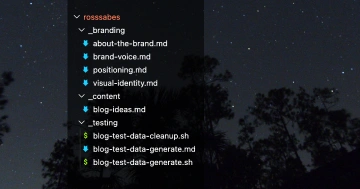
In most of my work, documentation was treated as an afterthought.
A project would begin with a conversation, a few notes, and perhaps a proposal. Development would start. The software would be built, tested, and deployed. If there was time at the end, documentation might be written to explain what had already been created.
The code was considered the source of truth.
That assumption is beginning to change.
As AI-assisted development tools become more capable, documentation is moving from the end of the process to the center of the process. Instead of documenting software after it is built, we increasingly build software from documentation.
The traditional process often looked something like this:
Idea → Notes → Proposal → Development → Testing → Documentation
Documentation described the system after the fact.
Today, a different workflow is emerging:
Idea → Notes → Documentation → Draft → Documentation → Implementation → Documentation → Testing → Documentation
Documentation is no longer a final deliverable. It becomes a living asset that guides every stage of development.
The proposal becomes the first draft of the documentation.
The documentation becomes the implementation plan.
The implementation plan becomes the prompt.
The prompt becomes the code.
The code becomes a temporary artifact generated from the source of truth.
This shift has changed the way I approach projects. Increasingly, I view proposals, requirements, architecture decisions, content structures, workflows, deployment procedures, and technical notes as part of a single body of knowledge. These documents are not simply records of what happened. They are instructions for what should happen next.
The implications are significant.
Historically, software became trapped in its implementation. Businesses would invest years building systems on a specific platform or programming language. Eventually the technology would become outdated, but rebuilding was expensive because the real knowledge existed inside the code and inside the minds of the people who wrote it.
The software itself became the documentation.
A documentation-driven approach changes that.
When business rules, workflows, requirements, and technical decisions are properly documented, the implementation becomes far more flexible. A system built today in PHP could be rebuilt tomorrow in Python, Go, JavaScript, or on a platform that does not yet exist.
The documentation remains.
The implementation changes.
In the future, organizations may find that their most valuable technical asset is not their codebase, but the documentation that explains why the codebase exists and what it is supposed to do.
Code has a lifespan.
Frameworks have a lifespan.
Platforms have a lifespan.
Programming languages have a lifespan.
Understanding endures.
As AI continues to accelerate software development, the ability to clearly describe a system may become just as important as the ability to build it. The organizations that maintain a reliable source of truth will be better positioned to adapt, migrate, and evolve as technology changes.
Documentation is no longer just a description of the system.
Increasingly, documentation is becoming the system.
Need help organizing your documentation, systems, or web projects?
Most organizations already have the information they need. The challenge is that it is often scattered across emails, spreadsheets, PDFs, chat messages, meeting notes, and people’s memories.
I work with businesses to organize requirements, processes, websites, and technical systems into a reliable source of truth that can support both human teams and AI-assisted development.
If you’d like to discuss your project, visit the Contact page to get in touch.